The internet you can't search: the PRC blind spot
Most people assume that if something is being said about them online, a search will surface it. For anyone with China-linked interests, that assumption is not just optimistic — it is structurally wrong.

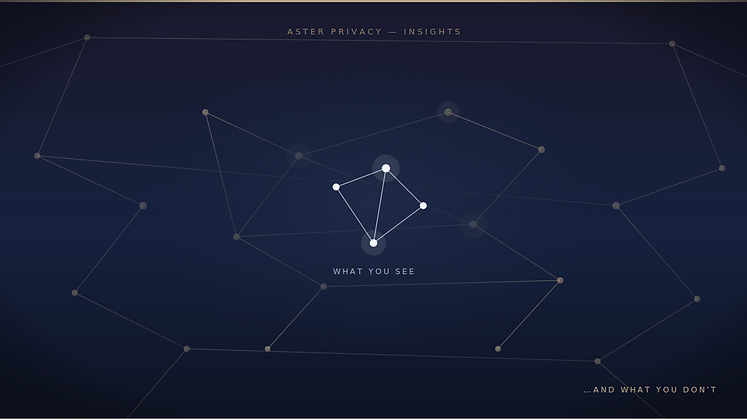
We are, all of us, more fluent with the internet than any generation before us. We talk easily about the cloud, about large language models, about the Internet of Things. We bank, work, argue and live online without a second thought. And that fluency does something quiet to us: it convinces us we understand what the internet is and what it holds.
That confidence is worth examining.
When we tell a new client that a search engine reveals only a fraction of what exists about them online, the first reaction is usually polite scepticism — a raised eyebrow, a "surely not." Then we explain the part that tends to change the conversation. There is an entire parallel internet, used by more than a billion people, that Western search engines do not touch at all. Not "indexed poorly." Completely untouched.
This isn't said for effect. China's major platforms — WeChat, Weibo, Douyin, Xiaohongshu, Bilibili — operate as what Fortune has described as "walled gardens": "closed ecosystems set up by tech giants to keep users from straying to outside platforms." The consequence, as Fortune put it, is that even inside China "search engines like Baidu — China's Google equivalent — capture only a tiny slice of content that's published online." If Baidu can't see it, Google was never going to.
And the population living inside those walls is not a niche. By late 2024, according to CNNIC data compiled by the Singapore language firm EliteAsia, China had "1,101 million social network users… equal to 99.3% of all internet users." Practically the entire online population of the country — well over a billion people — lives on domestic platforms, because, as the same analysis notes bluntly, "Western apps such as YouTube, Snapchat, Tumblr, and Quora are blocked, so effective China strategies must be built entirely on domestic platforms." The conversation is happening; it is simply happening somewhere your tools do not go.
WeChat is the clearest case. It functions, as one seasoned China analyst writes at Pekingnology, as "the operating system for daily life" in the country — an "everything app" through which more than a billion people message, pay, read the news and run their businesses. And he is blunt about what that means for anyone standing outside it: "many Chinese entities now release information primarily or solely on WeChat, and WeChat content is not indexed on open web search engines like Google, Bing, Baidu, or, more recently, Large Language Models like ChatGPT." His verdict is worth sitting with: "choosing to avoid WeChat creates a blind spot in your China knowledge… It's not publicly archived on the open web. Even Chinese web search (like Baidu) doesn't capture it. There is no alternative one-stop source to retrieve that info. The only way in is to be in the ecosystem."
The scale of what sits behind that wall is easy to underestimate. Fortune reported that in a single year "articles posted on public WeChat accounts reached 360 million WeChat users, an audience larger than the population of the United States" — citing WeChat's own founder, Allen Zhang. And then the line that ought to stop any principal in their tracks: "not a single one of those articles will pop up in a Baidu search."
For someone with business, family, or reputational ties to China, the implication is direct and uncomfortable. If your name, your company, or your family is being discussed on these platforms — in a WeChat group, in Weibo commentary, on a Xiaohongshu post, in a short video on Douyin — a Western search will tell you precisely nothing. You could check Google every day for a year, run every mainstream Western OSINT tool you can license, and remain completely unaware of a conversation reaching millions of people, in a language and on a platform your tools simply cannot reach.
This is what we mean by the PRC blind spot. And here's the part that trips people up: it isn't hidden the way dark-web data is hidden. It's the opposite. It sits in full view, on the most-used apps on earth, behind a wall that ordinary monitoring just doesn't climb. The walls even divide China's own internet from itself — a Weibo link, as Fortune noted, has historically been blocked on WeChat, so "a user can't share a Weibo post with friends on WeChat the way a U.S. user might forward a tweet." If the platforms won't surface each other's content internally, no external tool is going to stitch it together for you.
The trouble isn't spread evenly, either. A Singapore-based principal with mainland interests, a family with cross-border ties, an executive whose dealings touch Greater China — these are exactly the people most likely to be talked about on the Chinese-language internet, and exactly the people whose Western advisers, cybersecurity vendors and monitoring tools are structurally incapable of seeing it. The exposure and the blindness land on the same person.
Closing that gap isn't a matter of a cleverer search query. It means working inside the Chinese-language environment itself — in the language, on the platforms, with a feel for how a story actually travels from a WeChat group to a Weibo thread to a Douyin clip. That is, frankly, one of the specific reasons Aster Privacy exists. For a good number of the people we work with, the half of their exposure that matters most is the half nobody else is even looking at.
So here is the uncomfortable takeaway for anyone with China-linked exposure. A clean Western search is not evidence that you're in the clear. It may only be evidence that you've been searching the wrong internet.
Sources
- Zichen Wang, Why Every China Watcher Must Be on WeChat — Pekingnology (2025)
- EliteAsia, 10 Top China Social Media Platforms 2026 (CNNIC data, updated 2026)
- Grady McGregor, Beijing may finally fix one of the biggest headaches of using China's internet — Fortune (2021)
- Link Building Journal, China, Baidu and the WeChat-era walled gardens (supporting reading)
This piece was written by the founder of Aster Privacy, a Singapore-based protective-intelligence firm working discreetly with principals, family offices, and executives. Aster Privacy is led from a dual vantage point: an active background in executive protection — the close protection of principals, public figures, and their families — combined with the digital-exposure work that increasingly determines physical risk. The firm maps what is discoverable about a principal across the open web, dark web, and Chinese-language platforms, and translates it into practical protection. By referral and appointment.